
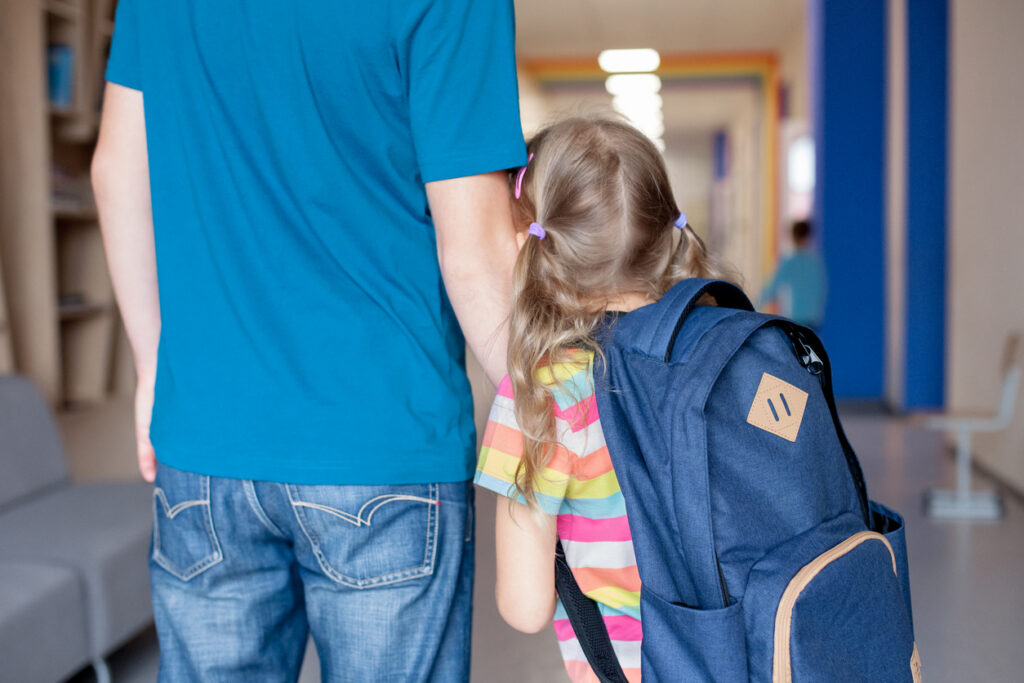
As summer begins to wind down, children can experience a mix of emotions about returning to school. They may feel excited to see friends while also worrying about a new teacher, unfamiliar routines, or increased academic expectations. These feelings are a normal part of adjusting to change.
However, for some children anxiety extends beyond the typical “first-day jitters” and begins to interfere with daily life. Knowing the difference can help parents respond with confidence and seek support when it’s truly needed.
Why Back-to-School Can Feel So Stressful
Even positive changes require adjustment.
Returning to school often means:
- Earlier mornings and less sleep
- New teachers and classmates
- Increased academic demands
- Changes in friendships
- More independence
- New sensory environments (busy hallways, cafeterias, buses)
- Separation from parents after a relaxed summer schedule
Children who are naturally cautious, highly sensitive, neurodivergent, or who have experienced anxiety in the past may find these transitions especially challenging.
What’s Considered Normal?
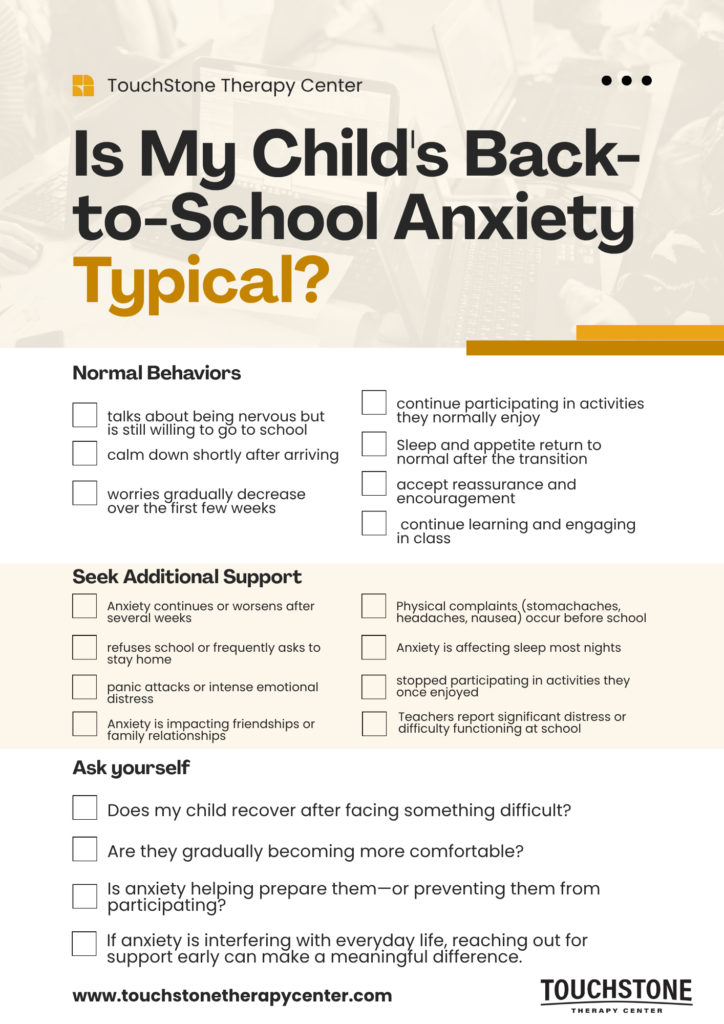
Many children will experience some anxiety before school starts or during the first week or two.

- Typical signs include:
- Asking questions about their teacher or classroom
- Feeling nervous the night or even the week before school
- Mild stomachaches that improve once they arrive
- Wanting extra reassurance
- Feeling emotional at drop-off but settling shortly afterward
- Temporary changes in sleep or appetite
- Worrying about making friends or finding their classroom
The goal isn’t to eliminate anxiety altogether. A small amount of nervousness is part of growing, trying new things, and developing resilience. These feelings and reactions usually decrease as children become familiar with their new routine when school begins.
When Anxiety May Need More Attention
Parents may want to seek additional support if anxiety:
- Continues beyond the first several weeks of school
- Becomes more intense instead of improving
- Prevents your child from attending school
- Causes frequent physical complaints without a medical explanation
- Leads to panic attacks or extreme emotional distress
- Significantly affects sleep or eating
- Causes your child to withdraw from friends or activities they previously enjoyed
- Results in frequent meltdowns before or after school
- Interferes with learning, family life, or daily routines
While every child adjusts differently, persistent anxiety that limits a child’s ability to participate in everyday activities deserves attention.
How Parents Can Help
Validate Feelings
Feeling understood often reduces anxiety more than reassurance alone.
Instead of saying:
“You’ll be fine.”
Try:
“It makes sense that you’re feeling nervous. Starting something new can feel scary, and we’ll figure it out together.”

Stick to Predictable Routines
Children feel more secure when they know what to expect. Begin practicing school routines a week or two before school starts, including bedtime, wake-up time, meals, and morning responsibilities.
Focus on Confidence, Not Perfection
Remind your child of previous situations they successfully navigated. Building confidence comes from remembering past successes.
Examples include:
- Starting camp
- Learning to ride a bike
- Joining a sports team
- Meeting new friends
Avoid Feeding the Anxiety with Accomodations
As parents, it’s natural to want to remove anything that makes our child uncomfortable. However, repeatedly allowing children to avoid anxiety-provoking situations can unintentionally strengthen their fears.
Research from the Yale Child Study Center (Lebowitz, E. R., Marin, C. E., & Silverman, W. K. (2020) found that when parents consistently accommodate a child’s anxiety by helping them avoid feared situations or providing excessive reassurance, it can unintentionally reinforce the anxiety. While these accommodations often provide short-term relief, they may prevent children from learning that they are capable of coping with uncomfortable feelings on their own.
Instead, acknowledge their feelings while encouraging gradual participation and celebrating small successes.
Keep Goodbyes Brief

Long goodbyes can make separation more difficult. Create a consistent goodbye routine, express confidence in your child, and allow school staff to help with the transition.
When to Reach Out
If your child’s anxiety is interfering with school attendance, friendships, learning, or family life, or if your instincts tell you something feels different, it may be helpful to speak with a mental health professional.
Early support can help children develop healthy coping strategies before anxiety becomes more entrenched.
You Don’t Have to Navigate It Alone
At Touchstone Therapy Center, our behavioral health team works with children, teens, and families to build practical coping skills, increase confidence, and help children successfully navigate life’s transitions. Every child deserves to feel supported as they begin a new school year and every parent deserves guidance when they’re unsure what their child needs. For help to decide if your child’s back to school anxiety is typical or needs more support, download our checklist below: